World Bank report on digital wallets : a new paradigm – convergence of user-centric digital identity, data sharing and payments

The World Bank document provides a conceptual and architectural framework for understanding digital wallets, verifiable credentials, and their role in transforming digital identity, data sharing, electronic signing, and digital payments. It is intended primarily for government decision-makers and practitioners seeking to design, regulate, or oversee wallet ecosystems, although many concepts are equally relevant for private-sector participants of these ecosystems—including financial institutions, trust service providers, and technology platforms.
This paper focuses on how wallets work, what is new about them, and how they change digital identity, data sharing, electronic signatures, and payments. It also highlights the risks and challenges that implementers must address as these ecosystems grow.
The World Bank’s latest report on digital wallets points to a much bigger opportunity than payments.
Digital wallets are evolving into the infrastructure layer that connects identity, data sharing, electronic signatures and payments into a single user-controlled experience.
1️⃣ Digital Wallets Become Infrastructure
– The shift is from siloed systems to open, standards-based networks. Identity, payments and data sharing are converging into a common digital layer.
2️⃣ The User Becomes The Control Point
– Instead of repeatedly submitting the same information, users hold credentials in their wallet and share only what is needed. Less friction. More privacy.
3️⃣ Interoperability Changes Everything
– Historically, identity, payments and data sharing evolved separately. New wallet standards allow credentials from multiple issuers to work across organisations, sectors and borders. This is similar to how DeFi uses open standards to connect assets, liquidity and applications.
4️⃣ Adoption Is Already Happening
– India’s DigiLocker has more than 434 million users and manages over 9 billion documents. Countries including Singapore, Ukraine, Brazil and the UAE are already delivering services through wallet-enabled experiences.
5️⃣ Trust Becomes A Shared Utility
– Wallets use verifiable credentials and cryptographic proofs to establish trust without bespoke integrations.That should sound familiar to anyone working in blockchain or digital assets.
Real Life Example
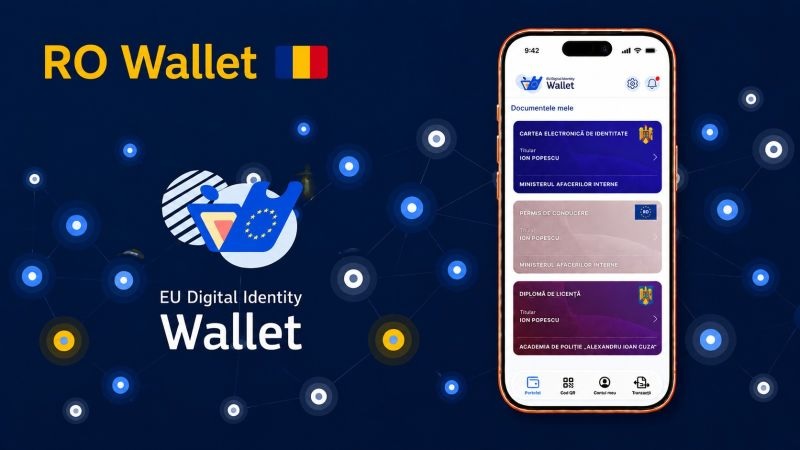
– The European Digital Identity Wallet will allow citizens to store and share credentials across EU member states. A qualification issued in one country can be verified in another without additional paperwork.
Why It Matters? Lory Kehoe, EU Director, Aave Labs | CEO, Push Ireland, commented: “Most people think wallets are about payments. The bigger opportunity is that wallets become the interface through which individuals prove identity, share data, sign documents and authorise transactions. For on-chain finance, that could help bridge regulated identity and compliance requirements with open financial networks.”
What Happens Next? Lory added: “Digital identity, payments, data sharing and AI agents are converging. The result could be portable, user-controlled credentials that work across institutions, applications and jurisdictions. The future wallet may not just hold your money. It may hold your digital life.”