Bye bye, banking apps? But who owns the agent?
A linkedin blog by Bryan Caroll
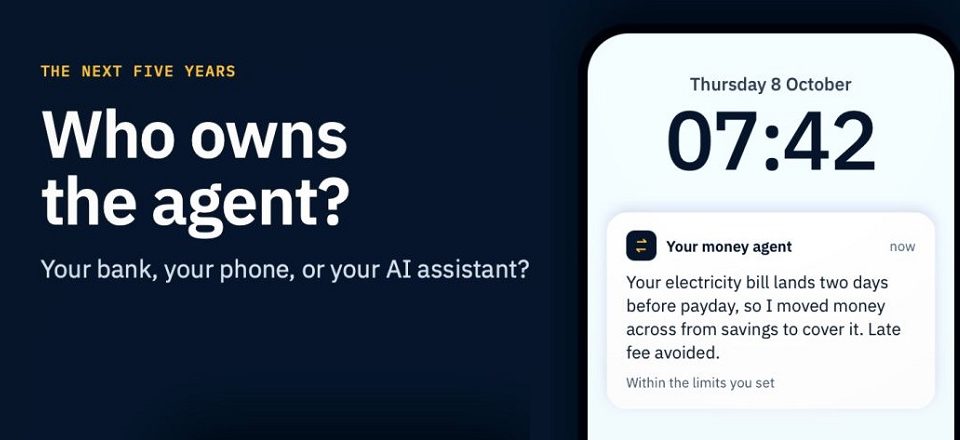
Within 5 years, a message like the one in this picture will be how many people experience their bank.
Your electricity bill lands two days before payday. An agent that knows your income, your bills and your goals moves money across from savings, avoids the late fee, and tells you afterwards. It acts within limits you have set. You never open a banking app.
That last part is what interests me most. At TNEX, and at the six digital banks I have helped launch and scale since, a huge share of our effort went into getting customers to open the app more often. Engagement was how we kept score. Agents change how that score is kept.
In the latest Evident data, Mastercard ranks among the top three vendors for new AI use cases announced by the world’s largest banks, mostly on the back of its agentic commerce pilots. The cloud, API and open data work our industry has done for a decade is exactly what agents plug into.
Which brings me to the question in the picture: who owns the agent?
There are now three serious contenders. The phone makers, who control the device. The frontier AI labs, whose assistants millions of people already talk to about their money, and which are building agents that can shop and pay. And the banks, who hold the licence, the balance sheet and the trust.
If the agent belongs to either of the first two, banks become utilities, competing on price inside somebody else’s interface. If banks build agents people genuinely trust, they keep the customer and gain a distribution channel bigger than mobile ever was.
I suspect many banks have not really started preparing for that choice.
So which would you trust with your everyday money: your bank, your phone, or your AI assistant?